
Emberhouse / Before your interview
How to Prepare for a Video Interview
You do not need to become a presenter before filming. A little preparation helps you focus on the conversation while the production team handles the camera, lighting, and sound.
This guide is for filmed company interviews, customer stories, employee profiles, and similar productions. A live broadcast or tightly scripted presentation may need a different preparation plan.
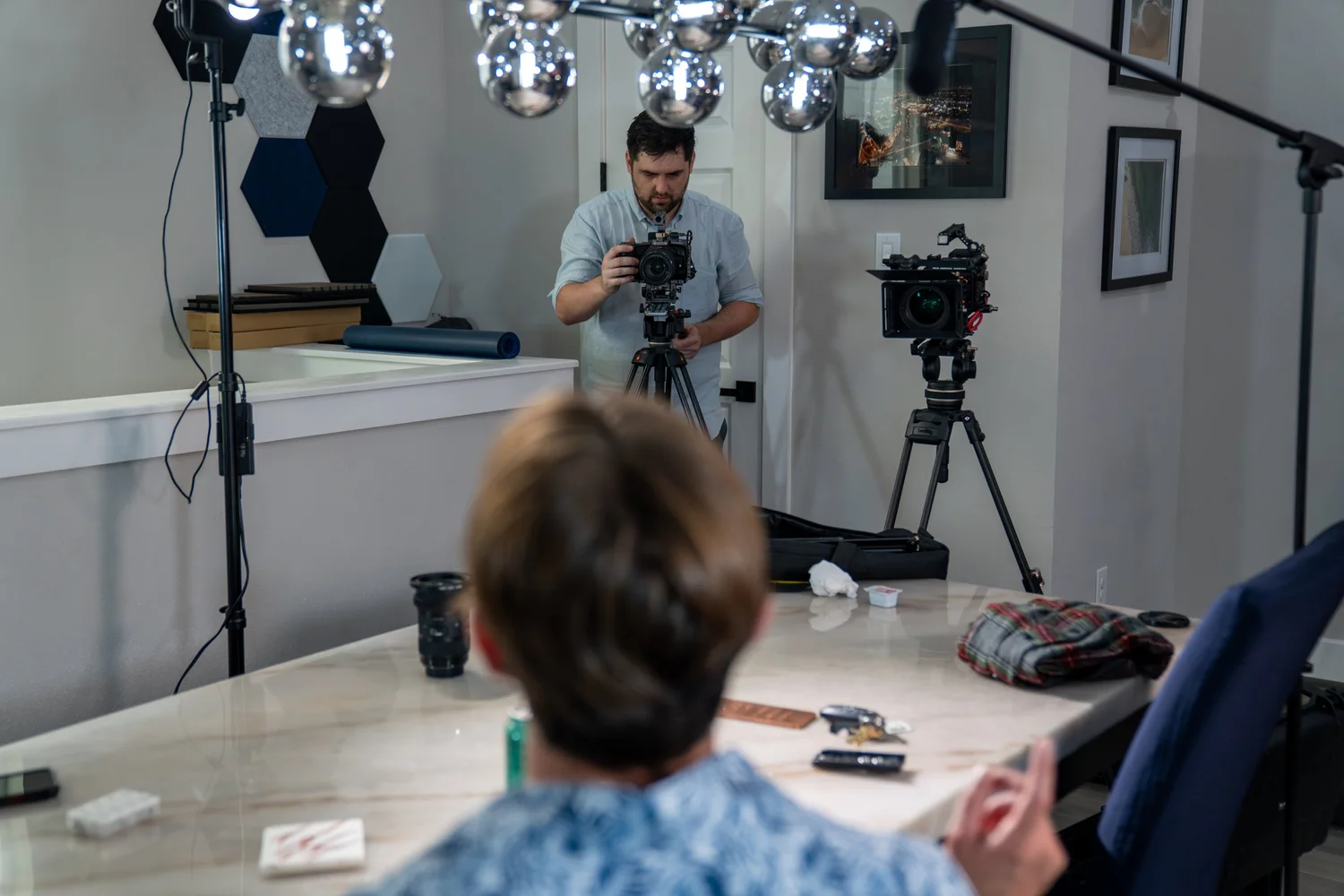
Understand the purpose before practicing answers
Ask who will watch the film, where it will appear, and which subjects the conversation will cover. An executive update, a customer testimonial, and an employee story need different perspectives. Knowing the intended use makes it easier to choose relevant examples.
For a company interview, think about what someone outside the organization may not understand. For a customer story, recall the actual situation and your experience rather than searching for a promotional line.
Prepare examples, not memorized paragraphs
If the format is conversational, write down a few themes and specific moments you want to remember. Practicing a complete script word for word can make it harder to respond naturally when the interviewer asks a follow-up.
- What happened, and what was your role?
- What was difficult or important about the situation?
- What did the team actually do?
- What changed, and what can you accurately say about it?
- Which detail would help someone understand the experience?
If dates, figures, product names, or technical terms matter, confirm them ahead of time. It is fine to say that a detail needs checking rather than guess during the interview.
Choose clothing that fits you and the setting
Start with what is appropriate for your role and the story. Comfortable, well-fitting clothing is easier to work in than an outfit chosen only because it seems formal.
- Bring an alternate top or jacket if the production team requests one.
- Ask about fine patterns, shiny fabrics, large graphics, or competing brand logos before filming.
- Consider microphone placement when choosing a neckline, tie, jacket, or accessories.
- Avoid jewelry or clothing that repeatedly makes noise near a microphone.
- Follow the production’s wardrobe guidance and any site-specific safety requirements.
Help identify a usable location
The most attractive room is not always the best interview room. Air-conditioning, refrigerators, nearby conversations, traffic, and reflective surfaces can affect filming.
Share possible rooms and any access restrictions with the production team in advance. They can assess the background, sound, light, power, and space needed for the setup. Confirm whether normal operations can continue around the filming area.
Know what to expect on the day
Before recording, the crew may adjust your seat, microphone, framing, and lighting. These checks are part of preparing a consistent image and clean sound.
Ask where to look. In many interview formats, you speak to the interviewer beside the camera; other formats use direct-to-camera delivery. Let the director establish the approach.
You can pause. In a recorded interview, it is usually possible to stop, ask for clarification, or try an answer again. Tell the interviewer if you need a moment rather than rushing through an answer that does not feel accurate.
Give the edit complete thoughts
Answer conversationally, but remember that the audience may not hear the question. A response such as “The biggest change was…” often provides more useful context than “Yes, definitely.”
Let the interviewer finish, take a breath, and respond. If you lose your train of thought, begin the idea again. The aim is a clear account in your own voice, not a flawless uninterrupted performance.
Prepare supporting footage too
Your interview may be paired with images of the workplace, a process, a product, or people interacting. Help the team identify the activities and locations that can honestly illustrate what you are discussing.
Arrange access, permissions, participants, and any necessary safety coordination. Share restrictions on confidential material, screens, customers, and work areas before the shoot.
A final preparation checklist
- Confirm the subject, audience, location, arrival time, and filming window.
- Review the themes and prepare a few specific, accurate examples.
- Check any facts that need precise wording.
- Follow the wardrobe guidance and bring requested alternatives.
- Confirm who can approve location access and supporting footage.
- Ask about intended uses, permissions, and the applicable review process.
- Leave room in your schedule for setup and reasonable adjustments.
For more about the filming approach, explore interview and testimonial video production or corporate video production.
Make room for a good conversation.
Tell us who will be interviewed, what the story needs to communicate, and where you want to film.
Plan an interview production ↗